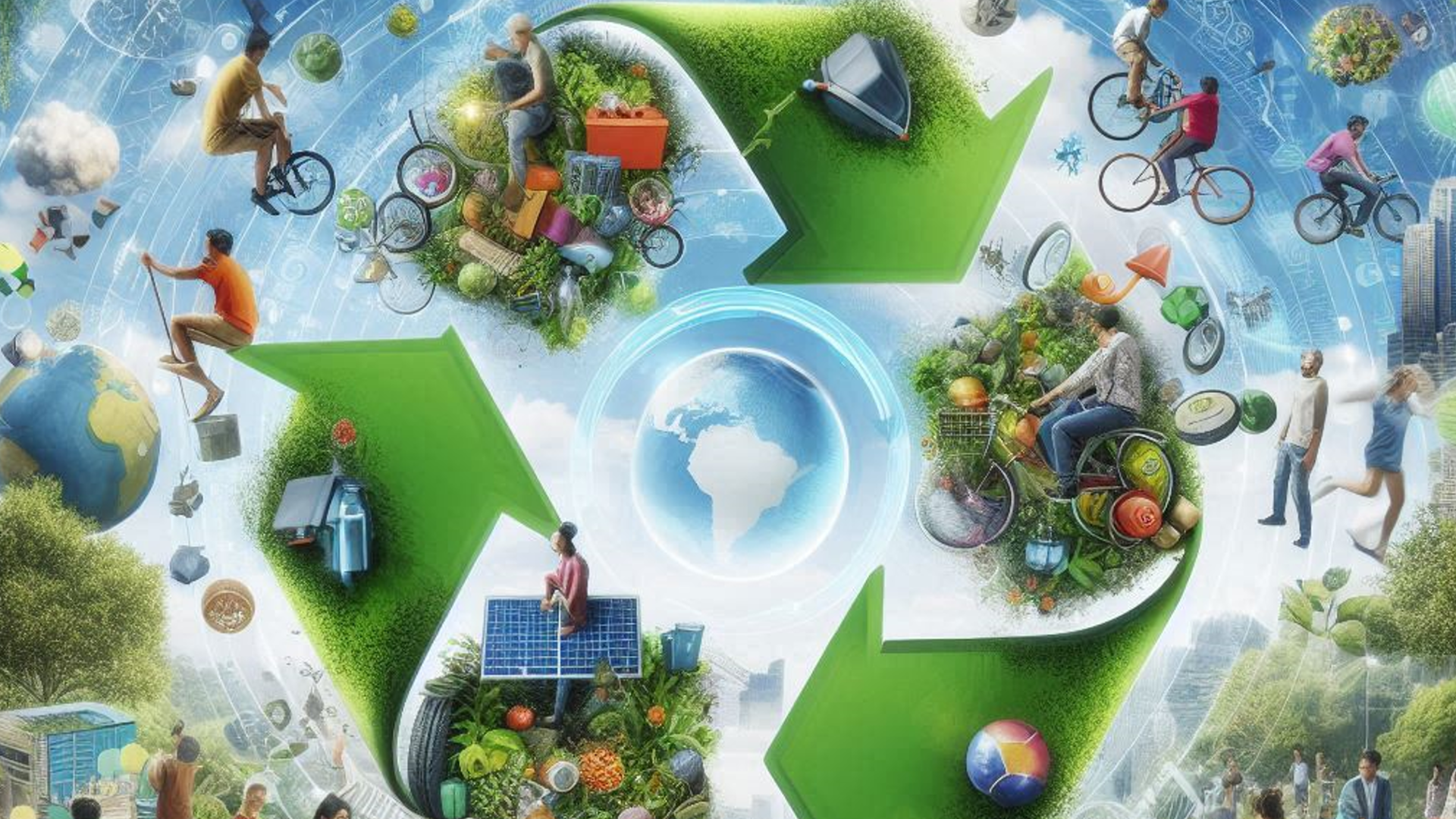
Imagine a world not defined by scarcity, but by abundance—an abundance of care, creativity, and connection. This is not a distant utopia, but a quiet revolution unfolding in our homes, neighborhoods, and digital town squares. It is the revolution of sustainability through reuse, and it begins with a radical shift in perception: seeing not waste, but potential; not an end, but a next.
For too long, our story has been linear. We extract, we produce, we consume, we discard—a relentless, resource-hungry line from mine to landfill. This story is exhausting our planet and, in a deeper sense, impoverishing our communities. But a new, circular narrative is being written, one that bends the line into a nurturing circle. It is a story not of owning more, but of experiencing more, caring more, and belonging more. This is the profound inspiration found in recycling, reusing, bartering, renting, and sharing.
Recycling is the familiar gateway, the alchemy that transforms a glass jar into a pavement, a plastic bottle into a fleece. It is a necessary act of respect, acknowledging that materials have a life beyond our single use. But the true magic starts *before* the recycling bin. It starts with **reuse**—the simple, powerful refusal to let a thing’s story end so soon. The mason jar becomes a vessel for homemade granola, a candle holder, a paintbrush stand. An old wooden door, sanded and loved, becomes a headboard. In reuse, we see not an object’s past, but its future. We become co-creators, imbuing things with new purpose and honoring the energy and resources already spent in their making.
This creative spirit blossoms fully in the human exchange of **bartering and trading**. Here, a shelf of unused books becomes a stack of vintage records. A skill in gardening is exchanged for a lesson in mending. This is economics re-imagined as a conversation, a mutual gift. It transforms our relationship with stuff from one of solitary consumption to one of community dialogue. The child’s outgrown bicycle, traded for a set of art supplies, carries with it stories and a sense of continuity. Bartering reminds us that value is fluid, subjective, and often found in the meeting of needs, not the counting of coins.
Then comes the liberation of **renting and sharing**. Why own a power drill that sleeps in a drawer for 362 days a year, when it could be part of a neighborhood library of things? Why purchase a lavish gown for a single gala when you can adorn yourself in a circulating masterpiece from a clothing rental service? This model champions access over ownership, experience over accumulation. It whispers a liberating truth: you can have what you need without it weighing you down. It builds interdependence, as we become keepers of shared resources for our community. Renting a camping tent or sharing a lawnmower through an app isn’t just practical—it’s a small act of trust, a thread in the social fabric.
Now, apply this philosophy to the very fabric of our lives.
Clothing: Fast fashion is one of the world’s great polluters. But imagine a wardrobe that is fluid—a curated collection of swapped, thrifted, rented, and mended pieces. Each garment has a history; a rented dress has danced at other celebrations, a swapped sweater has kept someone else warm. We express our style not by wearing the new, but by wearing the story, with creativity as our currency.
Electronics: The relentless upgrade cycle extracts a terrible toll. The new frontier is repair cafes, where volunteers teach soldering, and gadget libraries where you can borrow a projector or a professional camera. It is the company that refurbishes your phone, giving it a second life. This challenges the myth of planned obsolescence, asserting that our technology should serve us longer and better.
Housewares: Our homes need not be showrooms of brand-new uniformity. They can be living archives of found treasures—the rented set of fine china for a dinner party, the furniture passed down through a buy-nothing group, the kitchen tools borrowed from a friend. These objects carry warmth and character that mass-produced items lack. A shared community bread maker or pressure washer reduces clutter in a dozen garages at once.
This is not a movement of deprivation, but of profound enrichment. It enriches our planet by easing the burden on its resources. It enriches our lives by freeing us from the clutter and debt of endless buying. Most beautifully, it enriches our human connections. It fosters neighborhoods where people know each other’s names and needs, where a borrowed cup of sugar—or a borrowed carpet cleaner—becomes a small ceremony of trust.
We are not just saving materials; we are weaving a new kind of world. A world where value is circular, where creativity trumps consumption, and where community is our greatest resource. Every time we choose to repair, share, swap, or rent, we are casting a vote for that world. We are saying: There is another way. A way that is more imaginative, more connected, and more alive.
Pick up that item you were about to discard. See its potential. Share what you don’t need. Borrow what you do. Join the quiet revolution. The most sustainable future is not one we must buy anew—it is one we can build together from the beautiful, abundant pieces already in our hands.
Related Posts
The Imperative of Environmental Sustainability
Abstract: Environmental sustainability has evolved from a niche concern to a…

Pollution and Emissions Reduction
The pursuit of sustainability—meeting our present needs without compromising the…